


METAL SLUG RUSH
revivecontents
I approached METAL SLUG RUSH as a quick-action game rather than a simple nostalgia trip. It comes from revivecontents, sits in the action category, and is free to start, with optional purchases ranging from $0.99 to $104.99 per item. Its basic idea is easy to understand: move through dangerous encounters, defeat enemies, improve your character, and try to make a stronger run the next time. The familiar arcade influence gives it an immediate identity, while the run-based structure asks for more planning than a traditional stage-by-stage shooter.
What interested me most was how that combination affects real people in real situations. A game can be mechanically appealing and still be difficult to read, tiring to control, or awkward to play outside a quiet room. Here, the experience is at its best when I can give it focused attention for a short session. It is less comfortable when I am distracted, using a smaller screen, or looking for a relaxed game that does not punish missed reactions.
How the game communicates its action
The strongest part of the presentation is its directness. The premise does not take long to grasp, and the action-oriented format makes the next goal feel obvious: survive, attack, collect improvements, and keep the run moving. That clarity matters for players who do not want to study a complicated ruleset before having fun. I could understand the general rhythm quickly, even though making good decisions under pressure took longer.
The visual language is built around movement, enemies, attacks, and rewards competing for attention. That is normal for this kind of game, but it creates an important accessibility trade-off. The more activity appears on screen, the harder it can be to identify a useful pickup or recognize a threat immediately. Players with reduced visual acuity, color-vision differences, or difficulty processing busy scenes may need more time than the game naturally offers.
I also found that readability is not only about the size of text. It is about how much information arrives at once. During calmer moments, improving a run feels understandable. During a crowded encounter, the player has to interpret movement, danger, positioning, and progression together. A large display can make that easier, while a compact phone may turn the same scene into a visual puzzle. This is one reason I would test it on the device I actually plan to use instead of assuming that a comfortable experience on one screen will transfer perfectly to another.
Related News






Navigation benefits from the game’s compact purpose. I am not dealing with a large social platform, a long list of unrelated modes, or a complicated productivity-style interface. The main loop keeps attention on the run. That helps first-time players, especially those who prefer learning through action rather than reading extensive instructions.
At the same time, action games often make menus feel secondary, and that can affect people who need extra time to inspect choices. I recommend pausing before selecting an upgrade rather than treating every decision as part of the reflex challenge. A few seconds spent checking what an improvement changes can prevent a weak build and makes the game feel less like a blur of taps.
Learning the run without rushing every decision
One useful habit is to separate immediate survival from long-term improvement. When enemies are approaching, I focus first on creating space and avoiding a careless hit. When the screen gives me breathing room, I examine the available progression choice and think about whether it supports the way I am already playing. This is more inclusive than trying to make every decision at maximum speed, because it gives players with slower reading or processing speed a practical rhythm to follow.
Gallery
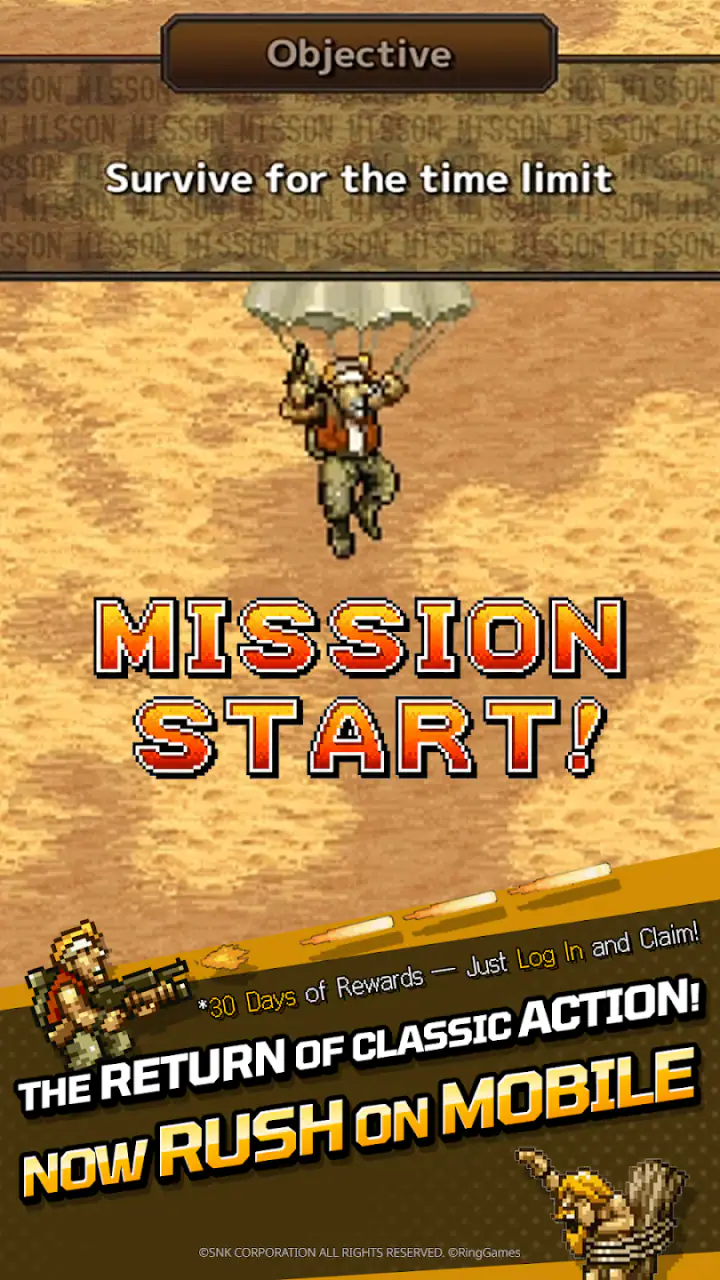
The run-based design also changes how failure feels. A failed attempt is not necessarily wasted time if I learn which situations overwhelm me or which choices make the next attempt more manageable. That structure can suit players who enjoy gradual mastery, but it may frustrate anyone who wants a fixed campaign where progress remains predictable. The difference is important: this is a game for repeating short challenges, not a straightforward replacement for a conventional arcade collection.
The store lists an average rating of 2.9 from around 1.1 thousand ratings, with roughly 40 written reviews, and the game has passed 100 thousand installs. I would read that reception as a reason to set realistic expectations. There is clearly enough interest to attract a substantial audience, but the score suggests that the experience will not satisfy everyone. I would not choose it solely because the name evokes a classic; I would choose it because I genuinely enjoy repeated action runs and can tolerate some friction around readability and control.
Motor demands and sensory comfort
The central physical question is how comfortable the controls feel during sustained action. A player may understand exactly what to do and still struggle if the required movements are too quick, too repetitive, or too precise. I found that the game asks for attention in short bursts, which can work well for brief play, but the same intensity becomes tiring when I try to continue for too long without a break.
For players with limited dexterity, hand tremors, joint pain, or reduced range of motion, the important issue is not simply whether the game is free. It is whether the control demands fit the player’s movement. Rapid corrections and repeated attacks can be more difficult than slower strategic games. Someone who needs generous timing or one-handed simplicity may prefer a turn-based action alternative, a slower roguelite, or a game with clearly documented control customization.
I would also avoid assuming that an automatic attack style, if present in a particular moment, removes all motor demands. Survival still depends on positioning, movement, and reactions. The player may have fewer actions to manage than in a traditional shooter, but that does not make the experience effortless. The trade-off is appealing for people who like watching a build develop while still making active decisions, yet it can remain demanding for anyone who cannot reliably respond to sudden threats.
Touchscreen play introduces another layer. Fingers can cover part of the display, especially on a small phone, and accidental contact is more likely when the action becomes crowded. Players who use a stylus, adaptive grip, or an unusual hand position should check whether their setup allows them to see enough of the scene while maintaining control. I would play with the device supported on a stable surface if holding it for a long time causes fatigue.
Sensory load is just as relevant. Bright movement, repeated attacks, enemy activity, and changing effects can be exciting, but they may be uncomfortable for people sensitive to flashing visuals, dense animation, or loud game audio. I would begin with the sound at a low level and take breaks as soon as the screen starts to feel tiring. Headphones can make effects easier to hear, but they can also intensify the sensory experience, so speakers at a moderate volume may be the better choice for some players.
The game’s action focus also makes background noise a practical concern. If I am playing in a busy place, I may miss audio cues or lose concentration while the display continues moving quickly. Anyone who relies heavily on sound should treat visual confirmation as equally important rather than assuming that audio alone will provide enough warning. Conversely, players who do not use sound may need to pay closer attention to the visual flow and may find crowded scenes more challenging.
Small habits that make play more manageable
I get a better experience by treating each attempt as a short appointment rather than an endless session. Before starting, I reduce distractions, clean the screen, and make sure the phone is positioned so my hand is not blocking the most important area. These are simple steps, but they matter more here than they would in a slow puzzle game.
I also recommend choosing a consistent grip and avoiding frantic changes during a difficult encounter. Predictable hand placement reduces accidental taps and makes it easier to build muscle memory. If a run begins to feel physically uncomfortable, stopping is sensible; the repeating structure means there is little benefit in forcing one more attempt while tired.
Another useful approach is to favor understandable improvements over flashy choices when I am still learning. A build that is easy to track can reduce mental load, even if a more complicated option might eventually be stronger. This is a meaningful trade-off for players who find layered effects or rapidly changing information difficult to follow.
Playing in different everyday situations
This game fits a short break better than a situation that demands divided attention. I can imagine playing it while waiting for an appointment, sitting on a train, or taking a quiet pause at home. The action gives a brief session a clear purpose, and the run structure means I do not need to commit to a long story chapter before stopping.
However, “short session” does not mean “safe to play while distracted.” If I am walking, supervising a child, crossing a street, or waiting for an important announcement, this is the wrong type of game. The player needs to watch the screen and react, so it should be treated as an activity that deserves attention rather than background entertainment.
Travel also exposes a practical limitation: mobile action depends on the reliability of the playing environment. A crowded commute, glare from a window, vibration, or an unstable grip can make precise movement harder. I would choose a seat or quiet corner when possible and avoid beginning a serious run when I know I may need to put the phone away immediately.
For younger players, the Everyone 10+ rating is a useful guide, but age alone does not determine suitability. The fast pace may be exciting for one child and overwhelming for another. Adults should consider the child’s comfort with repeated failure, busy animation, and optional purchases. Because the game is free to start but includes individual purchases from $0.99 up to $104.99, I would use the device’s purchase controls before handing it to a child.
That purchase range also affects how I evaluate the game as a recommendation. A free download lowers the barrier to trying it, which is helpful when a player is unsure whether the action style suits them. But the presence of optional spending means I would not describe it as completely cost-free in practice. Anyone managing a strict budget should decide in advance whether purchases are off-limits and avoid treating an attractive upgrade as a reason to spend impulsively.
On the technical side, the current version is 1.0.5 and it requires Android 6.0 or later. That makes checking the device’s operating system worthwhile before installing. I would also leave enough free storage and close unrelated apps if the phone is older or already struggling with demanding games. Those are ordinary preparation steps, but they can make the difference between a smooth trial and an unfair first impression.
Where the experience still creates barriers
The largest barrier is the gap between simple rules and demanding execution. I can understand the objective quickly, yet understanding does not guarantee that I can respond quickly enough when the action becomes crowded. This makes the game approachable at the explanation level but less universally approachable in practice.
Visual clutter is another concern. Players who need strong separation between enemies, effects, and rewards may find the busiest moments difficult to parse. I would be cautious about recommending it to someone who becomes disoriented by constant motion or who needs large, high-contrast targets. A slower action game with adjustable visual intensity would probably be a better fit in that situation.
The game may also be a poor choice for players who dislike repetition. Its appeal depends on trying again, learning from a run, and gradually making better decisions. If failure feels discouraging rather than informative, the same structure can become a loop of frustration. A linear platformer or a story-driven adventure would offer a more predictable sense of progress.
There is a similar issue for people who want extensive accessibility controls. I would not select this title on the assumption that every personal need can be adjusted through settings. Players who depend on remapping, reduced motion, specialized timing, or alternative input methods should verify the actual controls on their device and be ready to stop if the physical demands do not suit them.
Monetization can create a separate kind of pressure. Even when optional purchases are not necessary for a particular player, their presence may change how the progression feels. I prefer deciding my spending boundary before I begin, especially in a game built around repeated attempts and the desire to improve the next run. That keeps the challenge focused on learning rather than on whether a purchase might make the process more comfortable.
Compared with a standard arcade shooter, this game offers more reason to repeat a run because improvement and build choices add variety. Compared with a slower roguelite, it gives up some time for careful planning in exchange for faster reactions and more immediate excitement. Compared with a traditional Metal Slug-style campaign, it is less about memorizing a fixed sequence and more about adapting from one attempt to the next. Those differences make the choice fairly clear: fans of quick, replayable action may enjoy it, while players seeking a calm, fully predictable progression path should look elsewhere.
Who I would recommend it to
I would recommend METAL SLUG RUSH to a player who enjoys arcade energy but wants more replay value than a single pass through familiar stages. It is especially suitable for someone who likes making quick build decisions, learning from failure, and fitting action into short breaks. The free starting point makes it easy to test without committing immediately.
I would also suggest it to fans of roguelite survival games who do not mind a more visually intense presentation. The appeal is not just shooting; it is watching a run develop and deciding how to handle the next threat. That combination gives the game a distinct reason to exist rather than making it merely an imitation of an older arcade formula.
I would skip it if I needed a slow pace, generous reaction windows, minimal visual movement, or extensive control adaptation. I would also skip it if I wanted a game that could be played comfortably while multitasking. In those cases, a turn-based game, a calmer puzzle title, or an accessibility-focused action game would likely be a more considerate choice.
For families, I would treat it as a supervised trial rather than an automatic recommendation. The age guidance is Everyone 10+, but the more important questions are whether the child handles rapid action comfortably and whether purchase restrictions are active. A short play session is enough to reveal whether the screen feels readable and whether the controls cause frustration.
An inclusive verdict after spending time with it
My overall view is positive but selective. This is a lively action game with a clear hook, a useful free entry point, and a repeatable structure that rewards learning. The blend of arcade-style combat and run-based progression gives me a reason to return, especially when I have only a little time and want something more active than a casual puzzle.
Its inclusive appeal has limits. The game communicates its basic purpose well, but fast movement, busy encounters, touchscreen demands, and optional spending can all become obstacles. I would not call it broadly accessible simply because the premise is easy to understand. Ease of learning and ease of playing are different things, and this title is stronger in the first area than the second.
The best way to approach it is deliberately: test it on the intended phone, play in a focused setting, take breaks, and decide early whether the visual and motor demands feel comfortable. Keep purchases controlled, give younger players suitable supervision, and do not force a run when fatigue makes reactions unreliable.
With those expectations, revivecontents’ game can be a satisfying choice for players who want compact, energetic sessions and enjoy improving through repetition. It is not the right fit for every ability or context, but for the audience that likes fast action, flexible runs, and a familiar arcade spirit with a modern replay loop, it is worth trying while remembering that the average rating of 2.9 reflects a mixed reception.
FAQs for METAL SLUG RUSH
What is METAL SLUG RUSH?
METAL SLUG RUSH is a fast-paced mobile action game inspired by the classic METAL SLUG series. It combines side-scrolling combat with automatic movement, character upgrades, collectible units, and short missions designed for touchscreens. During play, you guide your team through enemy-filled stages, use powerful attacks, and try to defeat bosses while improving your squad between battles.
Is METAL SLUG RUSH free to download and play?
METAL SLUG RUSH can generally be downloaded for free, but the game may include optional in-app purchases. These purchases can provide items, resources, upgrades, or other advantages that help you progress more quickly. You can usually play without spending money, although progression may require more time and repeated missions if you choose not to buy premium content.
Does METAL SLUG RUSH require an internet connection?
An internet connection may be needed for certain features, including account synchronization, events, advertisements, online rewards, updates, and purchases. Some basic gameplay could be available in limited offline situations, but the experience may not be complete without connectivity. For the most reliable performance, connect to a stable Wi-Fi or mobile data network before launching the game.
What gameplay features does METAL SLUG RUSH offer?
The game focuses on accessible, action-oriented battles with familiar METAL SLUG-style visuals, enemies, vehicles, weapons, and explosive effects. You can build and strengthen a team, collect new characters or combat units, replay stages for resources, and take part in progression systems that encourage regular play. The controls are designed to be simple enough for quick sessions.
Is METAL SLUG RUSH suitable for children and low-end devices?
METAL SLUG RUSH is easy to understand, but it contains frequent cartoon-style shooting, explosions, enemy combat, and possible advertising or in-app purchases. Parents should review the game’s age rating and configure purchase restrictions when necessary. Performance can vary depending on the phone or tablet, so older devices may experience longer loading times, reduced graphics quality, or occasional slowdowns.
Pros
- Fast-paced stages are ideal for short gaming sessions.
- Classic characters and enemies preserve the series’ arcade identity.
- Simple controls make the game easy to learn on mobile.
- Frequent rewards help maintain progress during early play.
- Colorful 2D visuals run smoothly on many modern devices.
Cons
- Energy limits can interrupt longer play sessions.
- Upgrades may require considerable grinding over time.
- Random rewards can make progression feel inconsistent.
- Some missions become repetitive after extended play.
- Online features may be affected by connection problems.


